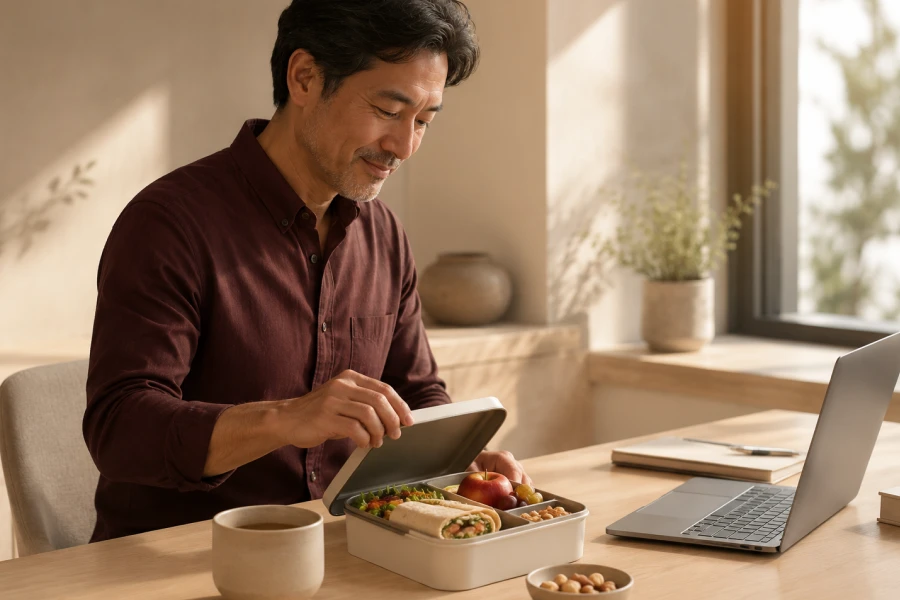
Noon arrives quickly when the morning is filled with messages, tasks, and meetings. That is why quick balanced lunch ideas work best when they are decided before hunger peaks. A good lunch should feel simple enough for a Tuesday and satisfying enough for a long afternoon. Start with ingredients that offer both comfort and convenience. Choose combinations that need little assembly after they leave your kitchen. A bowl, wrap, snack plate, or warm leftover can all work beautifully. The important part is creating an option you look forward to opening. Your lunch should support the rest of your workday instead of interrupting it. Keep the formula flexible so seasonal produce can easily join the rotation. Simple meals can still feel generous when every element earns its place.
Decision fatigue often appears long before the workday ends. It shows up when you open the refrigerator and see ingredients without a plan. Build a short list of lunches that solve that moment quickly. Try a grain bowl with beans, roasted vegetables, and a punchy dressing. Make a wrap with protein, greens, and something crisp for contrast. Pair leftovers with fruit and a yogurt cup when time feels especially tight. These balanced workday meals do not need complicated recipes to feel complete. The best option is usually the one you can make again. Keep your formula visible in your notes or grocery app. Familiar choices become powerful when your schedule becomes unpredictable.
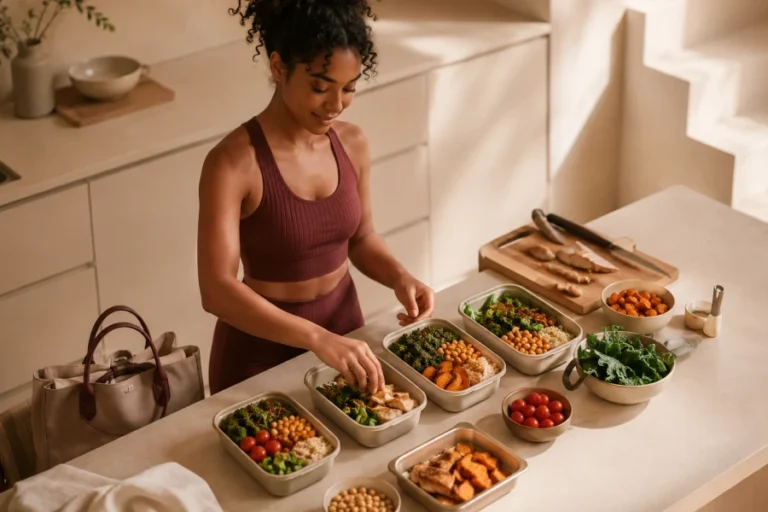
Every dependable lunch begins with a base that can carry the rest. Cooked rice, quinoa, pasta, greens, or roasted potatoes can do that job well. Make enough for several portions, then change the toppings around it. Add salmon one day and chickpeas the next. Use a creamy dressing for one meal and a bright vinaigrette for another. This approach gives you variety without a different cooking project every night. It also makes portions easier to estimate. Choose a base that still tastes good after storage. Keep it seasoned enough to stand on its own. A reliable foundation turns scattered groceries into something useful. Once that piece is ready, lunch becomes much faster to finish.
Texture is one reason a simple meal can feel surprisingly satisfying. Soft grains become more interesting with crunchy cucumbers or toasted seeds. Creamy spreads become brighter with crisp greens or pickled vegetables. Warm ingredients feel more complete with something cool on the side. Pack delicate pieces separately when they need protection. Keep dressings in a small container until lunchtime. A few minutes of thought can preserve the contrast you wanted. These details matter when you eat at your desk between calls. They make a packed meal feel less like a compromise. Food that looks inviting is also easier to choose again.
Not every workday includes a quiet kitchen or open microwave. Plan a few lunches that taste good cold or at room temperature. Pasta salads, hearty wraps, bean bowls, and snack plates are especially flexible. Include a mix of creamy, crisp, and flavorful elements. Add fruit or a small treat so the meal feels finished. For workdays away from home, fresh desk lunch ideas can make an unfamiliar space feel easier. Choose an insulated bag when you need extra flexibility. Keep a backup meal in the freezer for late planning nights. A good cold lunch can be every bit as comforting as a reheated one. The right format depends on your day, not a rule.
Leftovers become more appealing when you stop treating them as a repeat. A roasted vegetable dinner can become a grain bowl with fresh greens. Grilled chicken can turn into a wrap with a new sauce. Extra beans can become a crunchy salad with citrus and herbs. The key is changing one element that shifts the experience. A different dressing often does more than a second recipe. Add one new topping and the meal can feel intentional again. Keep the serving size appropriate for lunch, not dinner. This prevents the midday meal from feeling too heavy. Reworking leftovers saves effort while keeping the menu interesting. It is one of the simplest ways to cook once and eat well twice.
Repetition does not need to be boring when the system is smart. Choose three lunches that fit your lifestyle and practice them for two weeks. Notice which ingredients stay fresh and which disappear quickly. Track how long each option takes to pack. Then make your best choices part of your regular shopping list. These make-ahead lunch routines create more freedom than a long recipe collection. You save your creativity for meals where it matters most. The lunch hour becomes less stressful because you already know what works. Build from that confidence instead of constantly starting over. Consistency makes good food feel possible even during your busiest weeks.



Leave a comment